Threads of Clarification
What do you want your social media to BE?

It turns out that Threads has been an incredible gift.
Just probably not in the way that Meta was expecting.
What it has done was crystallize our vision of an ideal social media platform.
And in so doing, underscored how much existing platforms fall short of those expectations.
It’s definitely not just me. It seems this sentiment resonated pretty universally, as user engagement on Threads has noticeably declined.
To understand why, it's crucial to understand that Threads operates primarily as a discoverability engine.
That means that its supposed aim is to help users discover your content. But this discoverability seems to hinge on consistent engagement, and at levels that are almost certainly unsustainable.
Obviously it’s still early days, but what passes for a success metric on Threads is not easily discernable. I've observed this inconsistency not only with my very humble following, but also among broader audiences. The platform is clearly lacking when it comes to algorithmic discovery.
I’m not saying this is an intentional design choice, given the extensive data that Meta collects from Threads' users, buuuuut I’m not NOT saying it either.
The data collection is downright invasive, y’all. As a creator, I've accepted the risks of an online presence, but it doesn’t mean everyone else could or should.
Except it’s not just about the metrics.
It’s about how Threads made me feel.
Despite deliberately chosing to surround myself with my peers, and folks whose work I really admire, I felt a little like a new kid in the school lunchroom.
There were already unspoken rules, and I…didn’t know them.
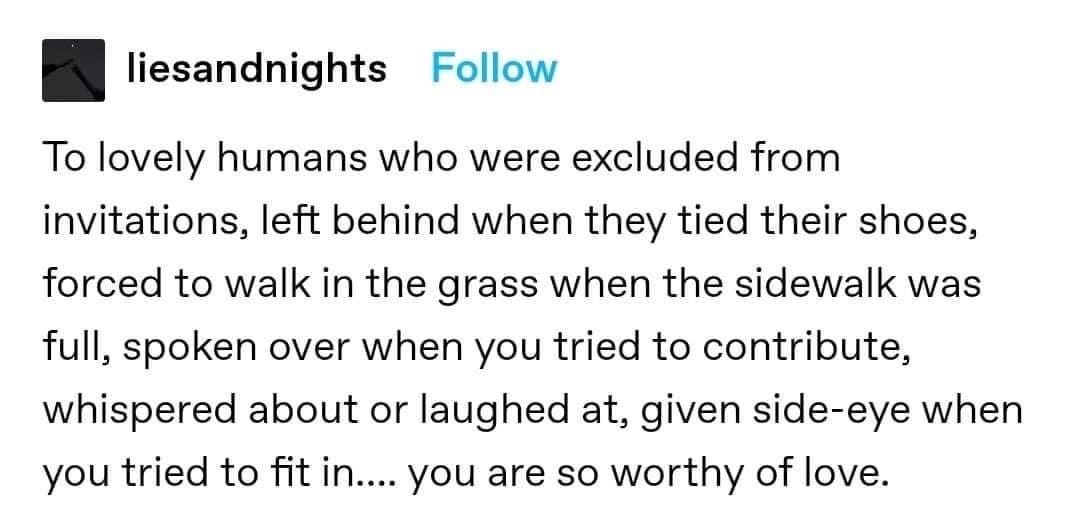
The truth is, I’ve spent far too much of my life as a social outcast to not recognize feeling like I’ve not been invited to the real party.
This past month of refining my digital presence has led me to understand that content creation and its marketing require the bulk of my effort. And so I’m trying to be mindful of how I engage with non-distributed media platforms.
Because until your content can be freely accessed from any platform, it will inevitably exist within a silo to some extent.
That's why the Neurodiversity Media Network spans multiple channels, and our content is published across various platforms. While there's a paywall for older content on Substack, this information can still be found elsewhere if one looks hard enough.
The concept of distributed media is predicated on the belief that knowledge should be freely accessible.
That’s because we live in the Information Age, where it's virtually impossible to prevent people from accessing information. Consequently, the focus should be on maintaining consistency in our processes and the content we produce.
If we’re transparent about what we're putting out into the world, our revenue can come from the integration. Make the knowledge free, and charge for the application.
And for me, that means crafting a clear message, and then putting it up on ALL the digital bulletin boards.
Whatever you do, just make sure that you aren’t putting all of your marketing efforts into one social media basket.