

On Friction
In which Briar goes to the library.

It’s highly likely that this letter will cover a lot of ground. Usually when I sit down to write a newsletter, I have a Thing I Need To Say. Today, I have Some Threads To Gather, and I suspect it’s going to take a minute to get there. In other words, you might want to grab a beverage.
Yesterday, I went to the library.
It’s been years since I stepped foot in one.
Which is really sad.
Libraries have always been a HUGE part of my existence. As a child, they were my safe space.
As far as I am aware, there’s nothing in standard Librarian Science that teaches one how to look for lost souls and abused children, but every librarian I’ve ever met possesses that skill anyway.
I can’t even blame the pandemic for my lack of library attendance. I stopped going years before.
Maybe…object permanence? Maybe technology? I’m not sure.
As I have learned over the years, the harder things are, the more I lean into the plan. That’s because having a plan greatly reduces decision fatigue.
But it’s more than that.
The more time I spend planning, the faster I execute. Which means that I can move slower in general. I have spent many years attempting to explain how this works to people, to varying degrees of success.
And because I am currently planning about planning, I have been working with Claude to try and operationalize some of these aspects of my life.
My success at this varies wildly, because the functionality of LLMs vary wildly. It’s a slot machine, and you are gambling not with just tokens, but also your time.
My first (and probably only, if I’m honest) visit to a casino was a revelation to me.
No windows!!! People smoking indoors!!! The noise and the lights!!!
And all of this is deliberate. That cacophony is what sucks you in, and then steals your time.
So much of modern technology is exactly like that. But LLMs especially.
A couple of weeks ago, Cheryl Woodhouse and I were bitching to each other about that slot machine effect.
Our friendship was built off the backs of bro marketers—literally. We used to send each other links to whoever we were mad about that day, and spend hours analyzing what made this shit work, and how to do things differently.
At some point though, we both offloaded that task to LLMs.
The reasons for it were varied. In our discussion about it, we unpacked things like The Skinner effect, the speed of a reply, and especially the LACK OF FRICTION.
Our relationship has evolved over time, too, but we have agreed to very deliberately bring back this piece of it.
And I need to be clear. It’s not that we missed it (we probably did, because we both seem to be enjoying having this back). But that wasn’t it.
It’s that we had both independently reached the conclusion that using the slot machine for this purpose was actually a bad fucking idea.
The foundations of my life are books, music, and film, specifically television.
Modern TV is different than it used to be.
Every episode ends on a cliffhanger, or a really killer hook.
I’ve been noticing this more and more of late, but the best example I can think of is The Pitt. Truly, that show is a work of art. It’s gritty, it’s dark, it’s 24 meets ER, with an all growed up Noah Wyle.
It explains everything that is wrong with modern healthcare, and it does it with class. I’m really trying to level set my expectations for the upcoming second season, because the first season will be difficult to beat.
And that’s…actually a problem.
It’s even in the language I JUST used. The show is competing with itself now. Everything has to be bigger, showier, flashier.
We don’t just develop characters anymore.
There is no monster of the week. If you’re not familiar, it’s a term that originates from shows like Supernatural or The X Files, where you had episodes that didn’t do anything in terms of the developing throughline. But they were fun.
Everything now is throughline.
Which is a problem, because there’s no friction in that, either.
(Ah. There it is. Took almost 900 words to get there, so this party is just getting started, y’all.)
Because I haven’t even told you why I went to the library.
See, I’m retiring my kindle from fiction.
A few months ago, I flew to Boston to record an episode of Ask Briar at MIT. And one of my favorite things to do on planes is read a book. A real one.
So I purchased The Priory of the Orange Tree by Samantha Shannon to take with me.
This was a mistake. Not because the book was BAD. But because it’s the size of a god damn doorstop. It’s like 900 pages. It was not exactly what I wanted to be schlepping through airports.
So I loaded up my kindle with a few other things, and off I went. But I didn’t read on the plane. I watched Shrinking instead. (Highly recommended. Harrison Ford is a force.)
I loved the book though. Tore through it in less than two days. Loved it so much I rearranged my bookcase for it. Carried it around the house and read, and y’all.
It was magnificent.
I’ve read and loved a lot of books exclusively on my kindle. And I’m not giving it up entirely—I’m still using it to skim nonfiction books that I want to buy a physical copy of.
For one thing, digital is cheaper. But it’s also easier.
It removed friction from reading when I desperately needed it. I stopped going to the library before my son died, so that’s not my reason there either, but my kindle literally saved my life. I don’t know what I’d have done without the ability to escape into a book that I didn’t have to leave my house to get.
But if I’m being honest, what I loved about The Priory of the Orange Tree isn’t the story. It’s that for a brief moment, I was able to recapture the feeling of being lost in a book.
And I’m about 93% sure it’s because it was a fucking doorstop. And it took effort to read.
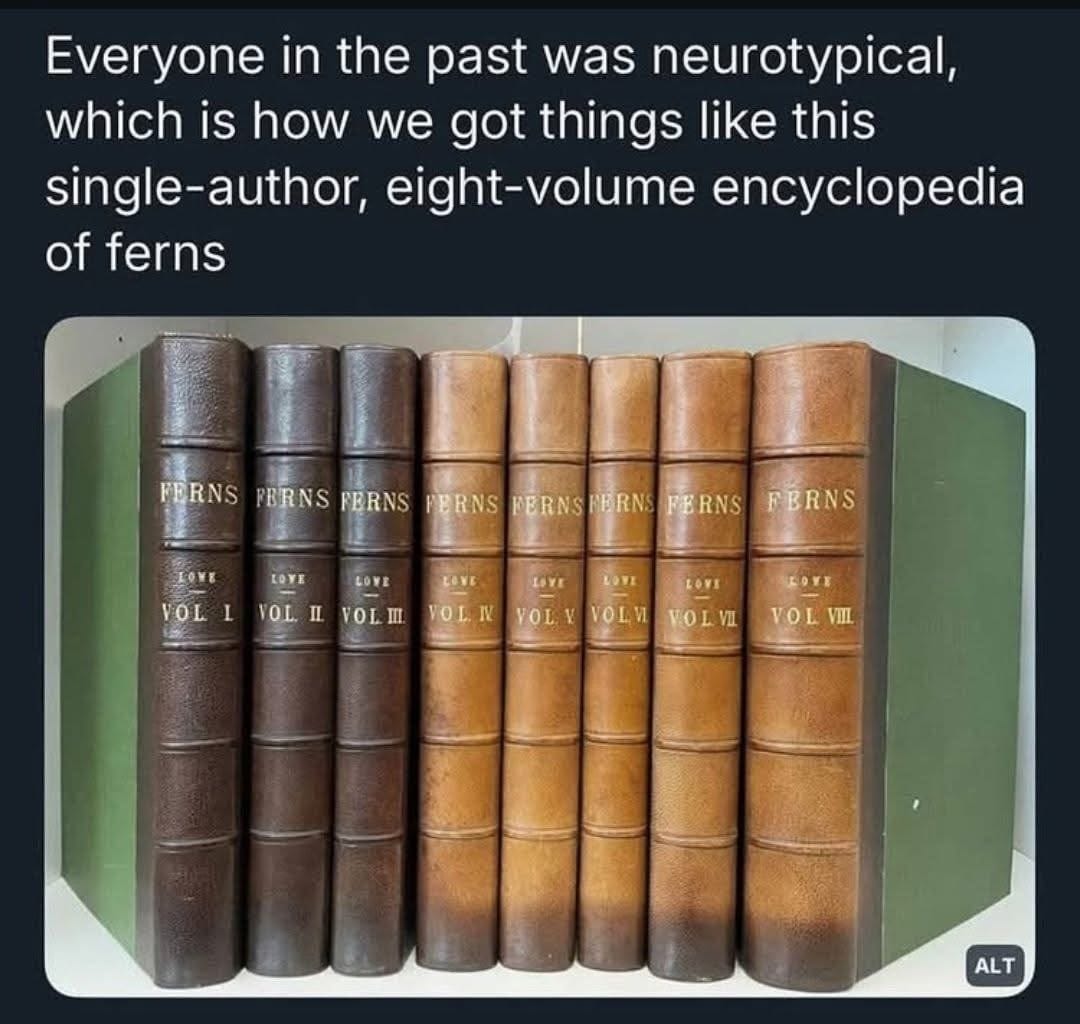
Reading as a hobby when I was a kid required COMMITMENT. I orchestrated my entire life around my library loan list, what needed to be read, and in what order, what needed to be renewed, and that’s not even mentioning having bags large enough to carry all my books, or book clubs, or book themed activities.
It’s probably when I learned how to plan for both immediate objectives (read 30 minutes a day to get a personal pan pizza) and future objectives (can’t renew this book, so it has to be read first).
It’s probably also where I received my earliest lessons in friction. Was the book hard to read because it made me feel something, or because the writing was bad? These questions and answers are highly subjective, but they exist.
My parents didn’t love taking me to the library, because I never wanted to leave. Huh. Funny, that. So a lot of that early management also involved reserving books ahead of time, itemized lists, and a personal record of what I’d read.
Now the process involves reading Goodreads reviews, downloading something to my kindle, and at least a 30% chance of losing interest and adding it to my DNF list.
Not only is it a terrible way to spend my time, it’s also not nearly as much fun.
It turns out that part of what I’ve been missing about my reading habit is the friction of library book timing dictating what gets read, not infinite access to unlimited entertainment.
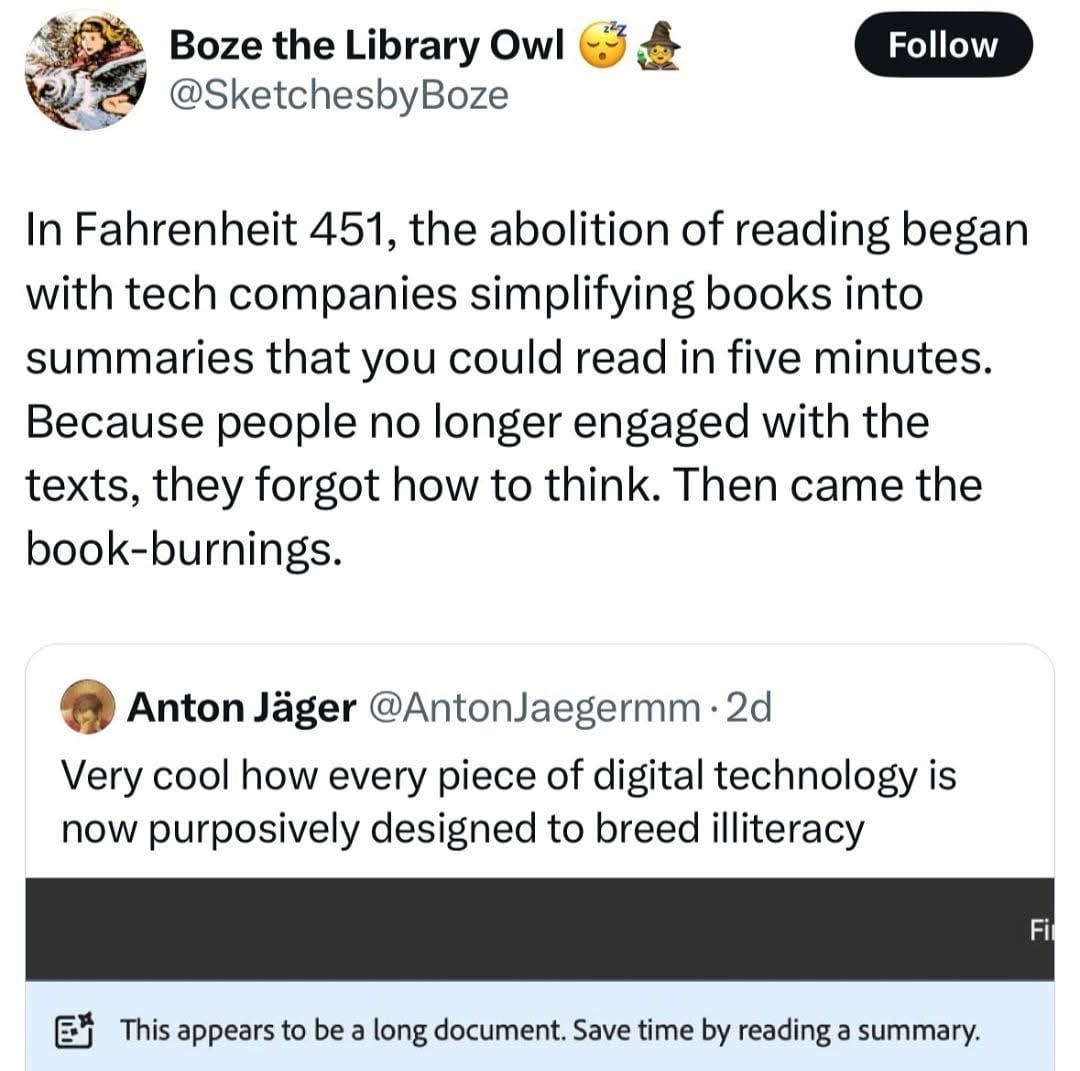
Just like Monster of the Week shows, part of what makes things worth showing up for is the friction. Turns out, a deadline on when I have to read the book by is friction I’ve been missing.
And this is where is gets tricky, right?
What’s an actual tool of accessibility, and what’s an elimination of friction to my own personal detriment? (Because I said the word deadline, and some of you physically, reflectively flinched.)
LLMs are like this.
I’ve spent decades in pursuit of true speech to text software, and now I have it, and it doesn’t even do that right.
If I can just transcribe, sure. But almost every app wants to “clean it up” which actually means changing very precisely chosen words, because a predictive algorithm just wants to do its job, which is predicting the next word, not…you know…actually transcribing the words that are there.
If I had a nickel for every time someone came up to me over the last year and said, “AI makes me feel stupid,” I’d have a lot of fucking nickels.
Trust me, it’s not just you.
Because I’m still here, all these decades later, tapping out words on my keyboard.
And, as it turns out, even with transcription, for some writing, I would rather tap it out. Sometimes I can record a long ramble, paste it into Notion, maybe have the AI clean it up (these days I almost always just do it myself).
But all of these words today have been written in my head first, and then on my laptop.
And they’re better words for it.
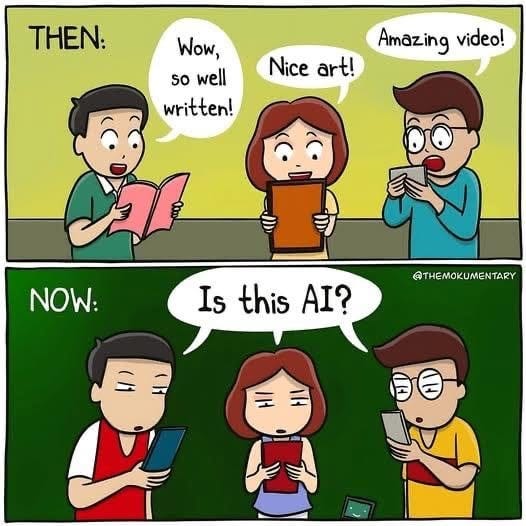
Part of what AI removes in particular, is friction. Friction from reading, thinking, strategizing, imagining. And I’m not saying that AI, or even LLMs don’t have a ton of practical uses.
But there are different types of friction. The kind that prevents you from starting is bad. The kind that propels momentum is good. And which is which is honestly going to be both highly personal, and wildly variable.
What’s key is examining the ways that friction shows up in your life. The good and the bad. Relationships are friction. Sex is friction. Writing is friction. Almost everything worth doing is friction.
But what kind?
Is it worth having in my life? Is it worth having in yours?
I know it’s taken me most of the day to write this…ramble about friction. I also know that at least three of you will reply to this email to tell me how much you needed to hear this. (There are never fewer than three. Often there are many more of you.)
That’s because I’ve spent years deliberately cultivating this email relationship with you. I tell you to hit reply when the stakes are low, so that you’ll do it when the stakes are higher.
And I think that what’s happened for so many of us is that we removed the wrong kinds of friction in pursuit of what seemed easier, and now we start nothing and have nothing to propel momentum because of it.
My solution is the library. Needlepoint. Cooking from scratch. Planning within an inch of my life.
The results speak for themselves.
I can think more clearly. I have less anxiety. I’m doing meaningful work that I love. It hasn’t made me a billion dollars yet, but that’s definitely not happening without a lot of friction, so….
So I guess I better get back to it.
For today, that looks like Remarkably Bright Creatures, by Shelby Van Pelt. It’s on the Bestseller Express list, which means that I only have a week to read it.
And Marcellus the octopus won’t wait.